
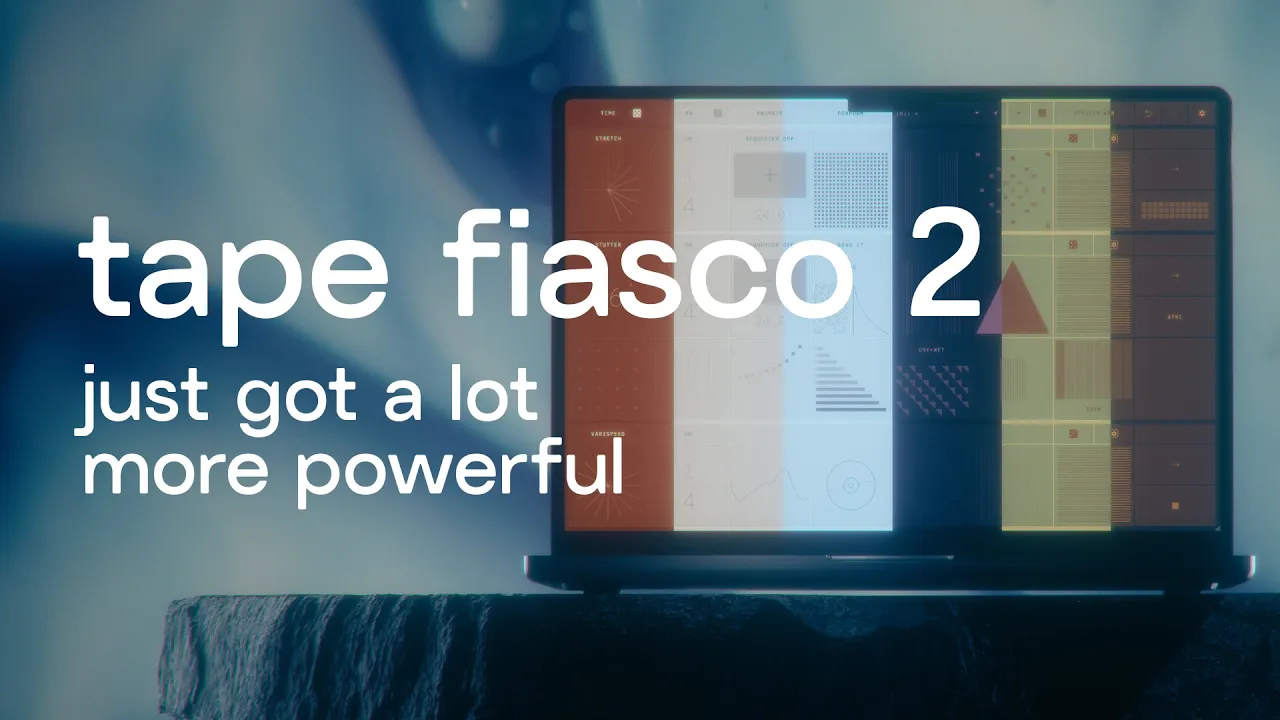
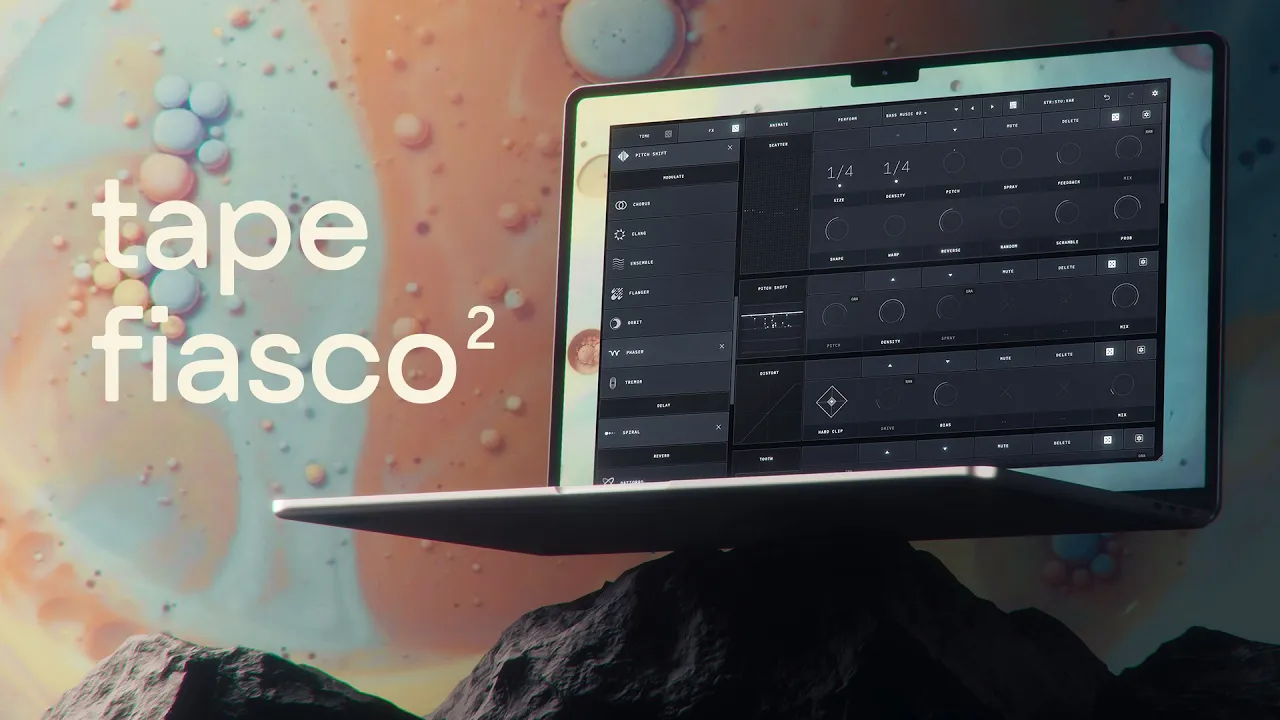
tape fiasco 2
The plugin that turns a single audio loop into a performance instrument.
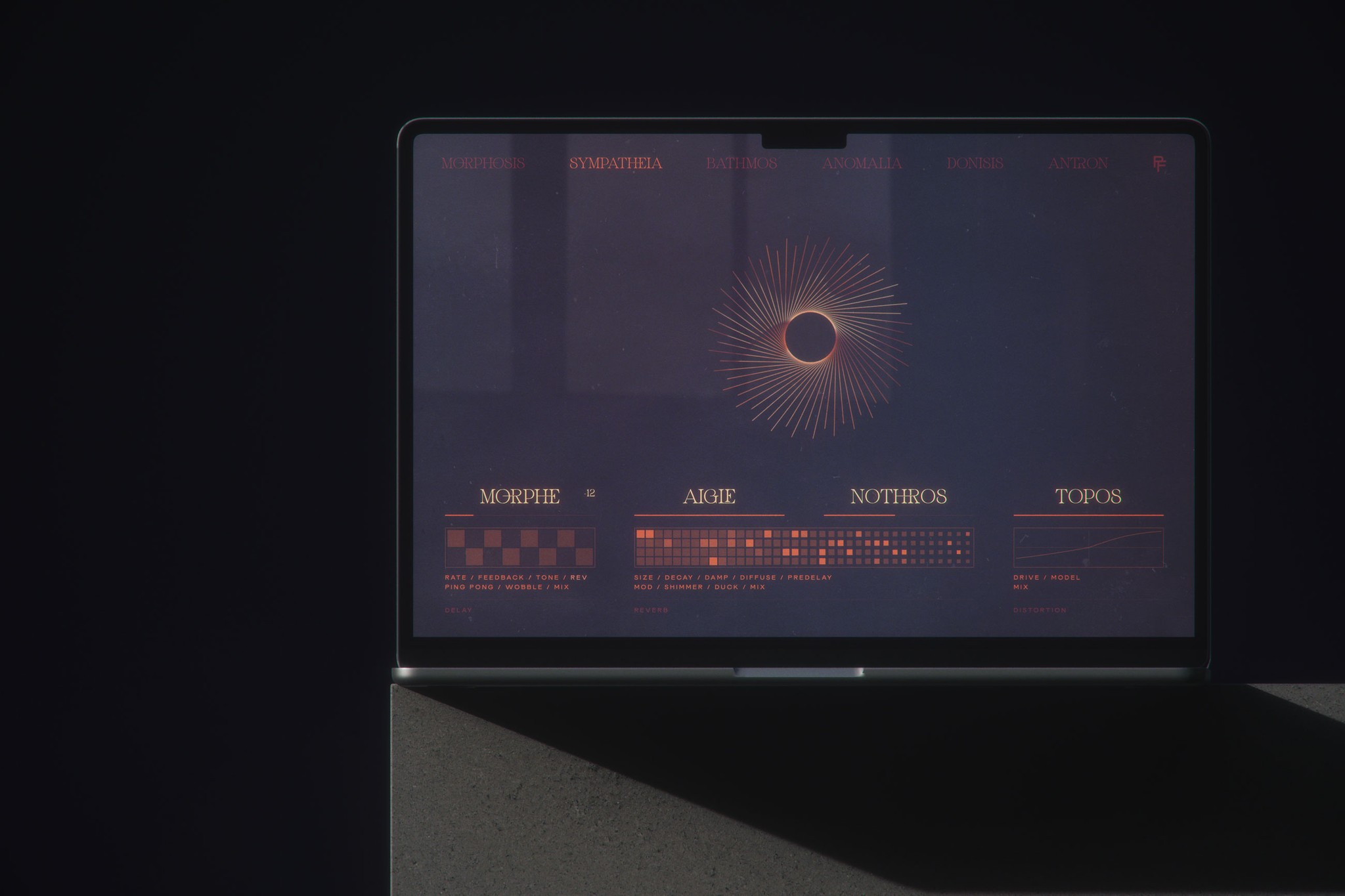
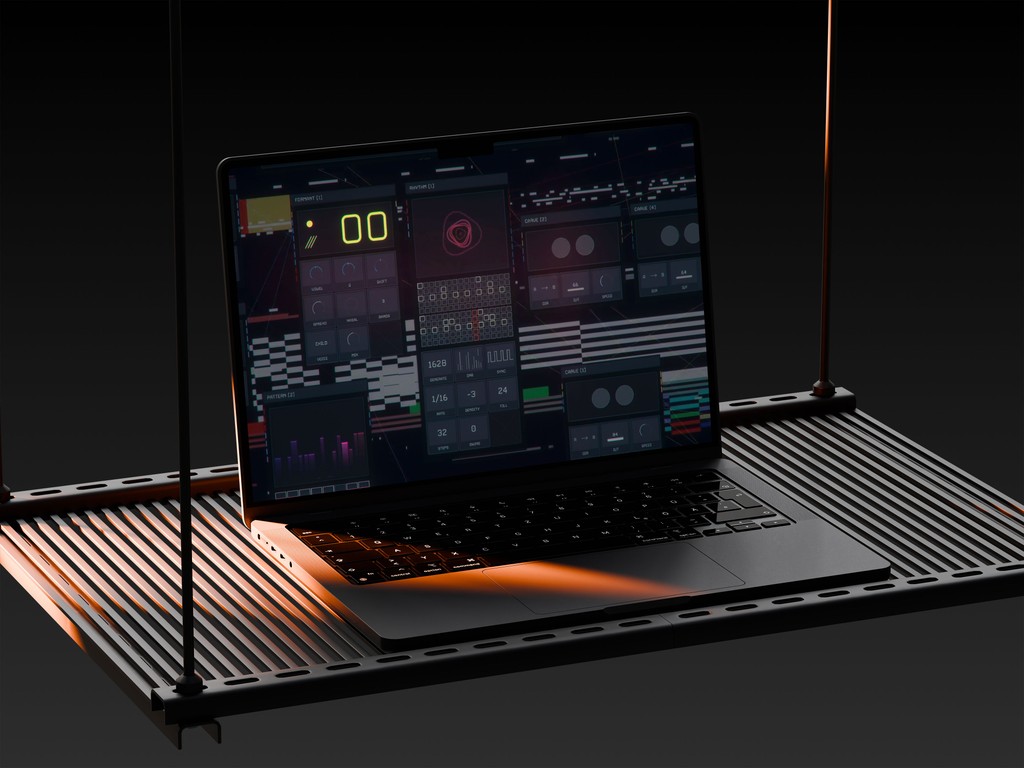
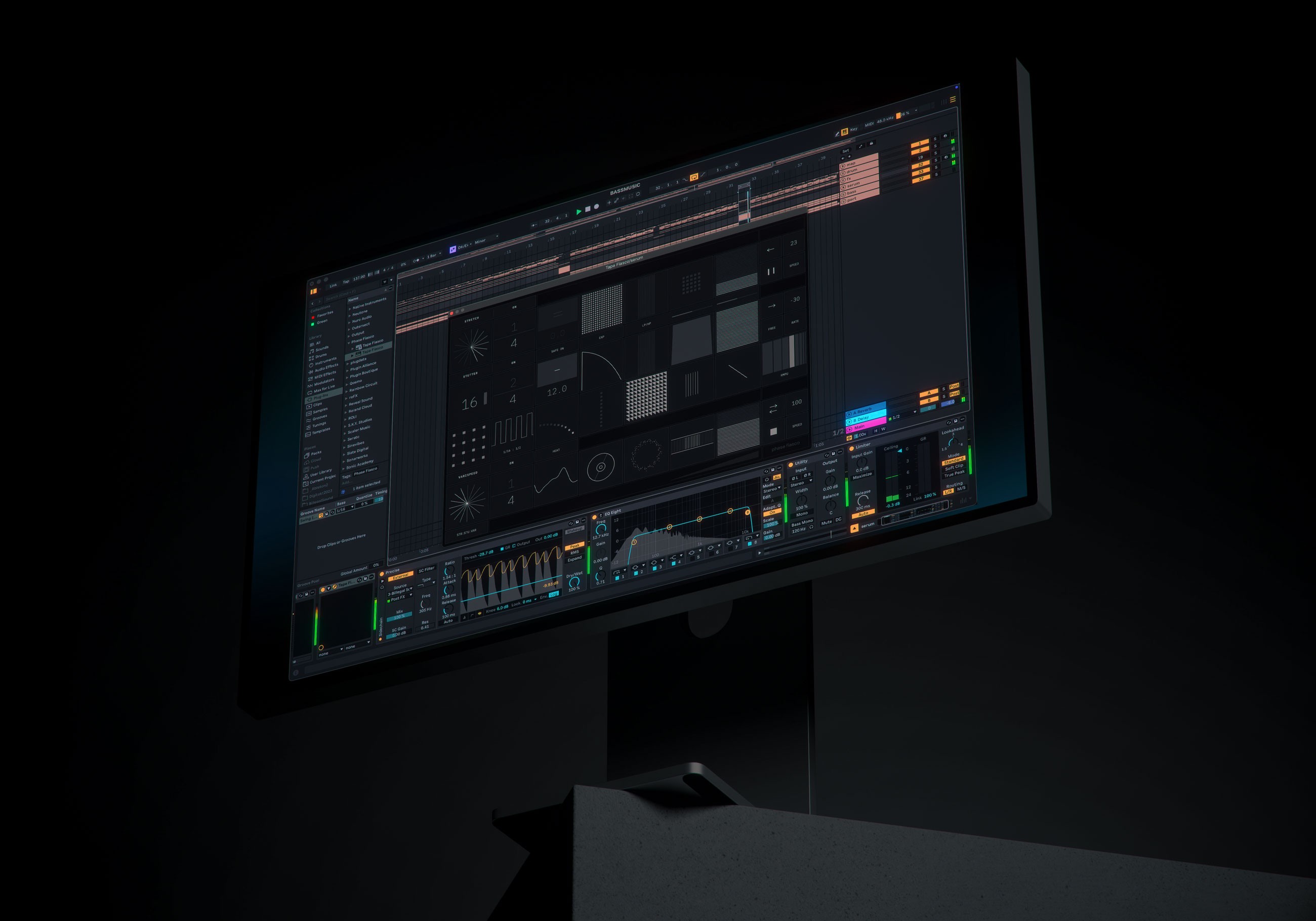
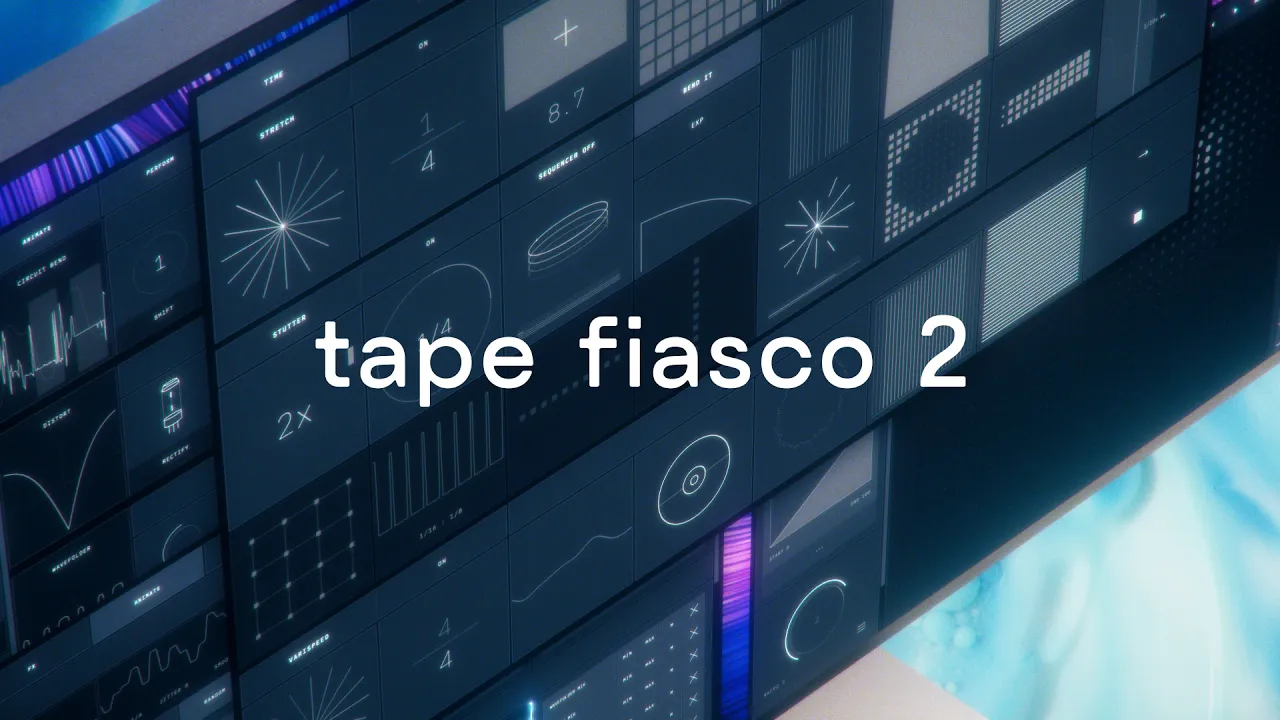
Most audio plugins process your sound. Tape Fiasco performs it. Four independent time engines run simultaneously: a dual-grain stretcher that slows, freezes and scrubs in real time; a tape machine with wow, flutter, stop and scratch; a rhythmic slicer that repeats at any subdivision; and BendIt, a circuit-bent buffer mangler with a seven-zone pitch macro from subtle wobble to full DJ scratch, quantized to the host grid. Chain them in any order.
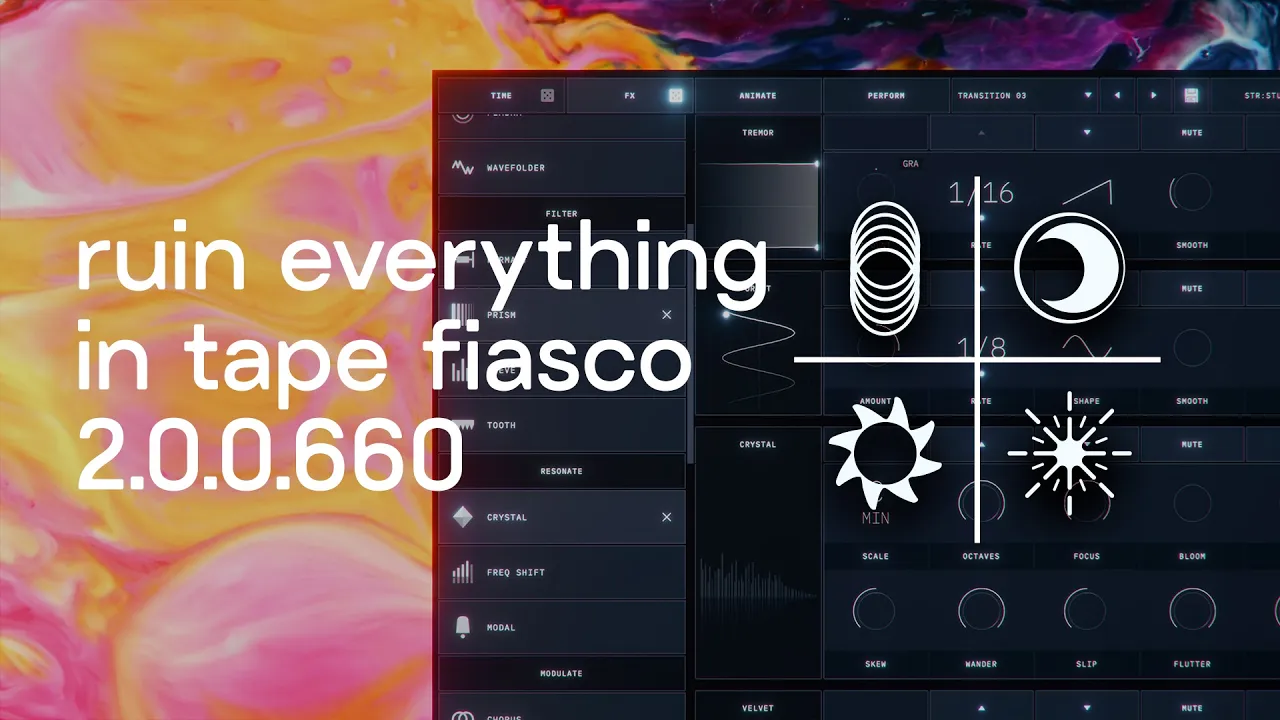
Routing goes deep. Animate any parameter with multiple modulators: LFOs, random sources, envelope followers, and bezier graph editors. Sequencers stretch, bend and stutter. The Perform section puts four macros and an X/Y pad on the front panel, each routing to up to five destinations with three-point crossfade curves, all recordable as host automation. If it moves on screen, you can automate, sequence, or modulate it.
Linux VST3
+ tax where applicable

What it does, at a glance
Section
What it covers
TIME
It is not a pitch-shifter (no formant preservation, no granular). Speed and pitch are coupled the way they are on tape: slow the playback, the pitch drops. The character comes from the mechanical modulation, the rebased-read crossfade per tempo window, the saturation/compressor pair, and the per-sample handling of direction and rate.
FX
ANIMATE
Four modulator columns (LFO / RANDOM / E.FOLLOWER), three bezier graph editors, plus the STUTTER sequencer and STRETCH sequencer. Up to 42 (72 with Perform) simultaneous modulation destinations.
PERFORM
Four macro knobs and a 2-axis X/Y pad, each routable to up to 5 destinations with per-slot response curves. Designed for host-automatable live tweaks.
The four engines
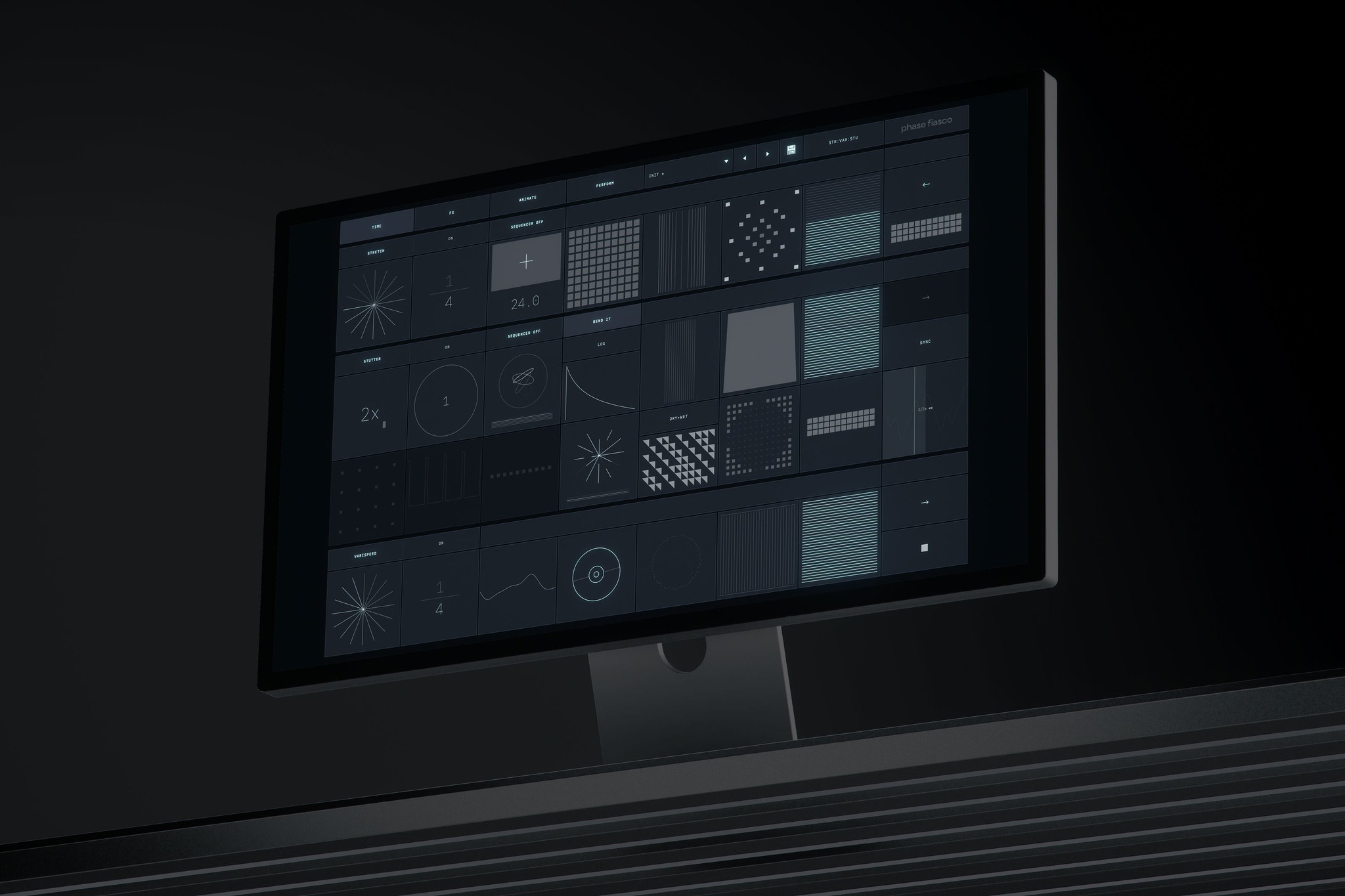
STRETCH
It is not a pitch-shifter (no formant preservation, no granular). Speed and pitch are coupled the way they are on tape: slow the playback, the pitch drops. The character comes from the mechanical modulation, the rebased-read crossfade per tempo window, the saturation/compressor pair, and the per-sample handling of direction and rate. Stretch speed can be sequenced by the 64 step Stretch sequencer.
Stutter
A rhythmic capture-and-repeat slicer. Audio is captured into a slice on the host beat grid; that slice is then looped at a rate set by RATE (free ms) or DIVISION (note division). Every loop has its own pitch shift, optional pitch ramp per repeat, decay across repeats, alternating pan, mid-cycle re-capture probability, and 6 rhythmic patterns (even, dotted, triplet, swing, ramp up, ramp down). 14 LINK presets bundle a rate-and-capture pair onto a single knob.
OFF→ON enabling is beat-aligned: the read head rewinds to the start of the current capture cycle, so the first stutter plays past audio (the kick attack, not the trailing decay).
A built-in STUTTER SEQUENCER (64-step) drives RATE or DIVISION per step, host-quantized, with sample-accurate transitions.
bend it
Varispeed
A tape-machine emulation. Continuous capture into a 2-second ring buffer; a single read head plays back at variable rate with mechanical wow/flutter, momentary tape-stop, DJ-style scratch, tanh tape saturation, and a peak-envelope compressor.
Three modes: Forward, Forward-Reverse (bipolar speed knob: centre stopped, left ramps reverse, right ramps forward), and Reverse. The wow and flutter are two recursive sine oscillators (0.5 Hz and 6 Hz) for the irregular pitch wobble of a real transport. Scratch is a ±100% pitch-bend wheel with zero-crossing direction flips.
Slow the tape, the pitch drops. Drop the tempo lever, the pitch drops. The character comes from the modulation, the saturation, and the capture-window rebase that keeps the section rhythmically tied to the host.
Category
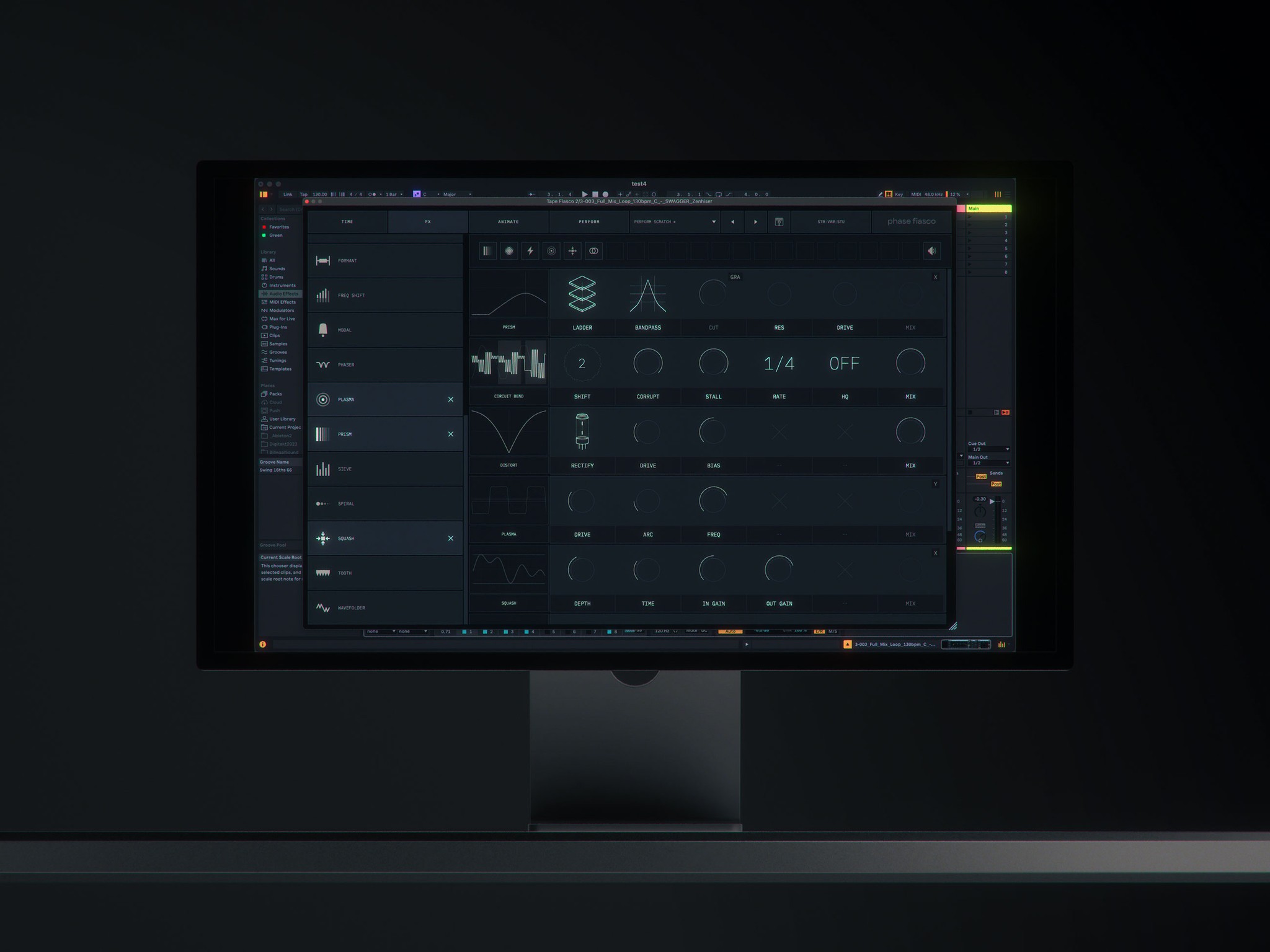
Effects
DISTORTION
BITROT (bit crusher)

CIRCUIT BEND (memory-chip glitch)

DISTORT (12-model waveshaper)

EXCITE (Aphex aural exciter)

PLASMA (hysteretic arc discharge)

WAVEFOLDER (west-coast wavefolder)

FILTER
EQ (Parametric EQ and Filter)
New!

FORMANT (5-band vowel filter)

PRISM (4 topologies: SVF / Moog ladder / 303 diode ladder / "broken" transistor)

SIEVE (Xenakis spectral STFT sieve)

TOOTH (3-comb filter)

Pitch
PITCH SHIFT (Granular pitch shifter)
New!

granular
SCATTER (Granular FX)
New!

RESONATE
CRYSTAL (playable scale-tuned bandpass bank, up to 60 voices)

FREQ SHIFT (Bode SSB shifter)

MODAL (24-mode struck resonator)

MODULATE
CHORUS (4-voice pitch doubler)

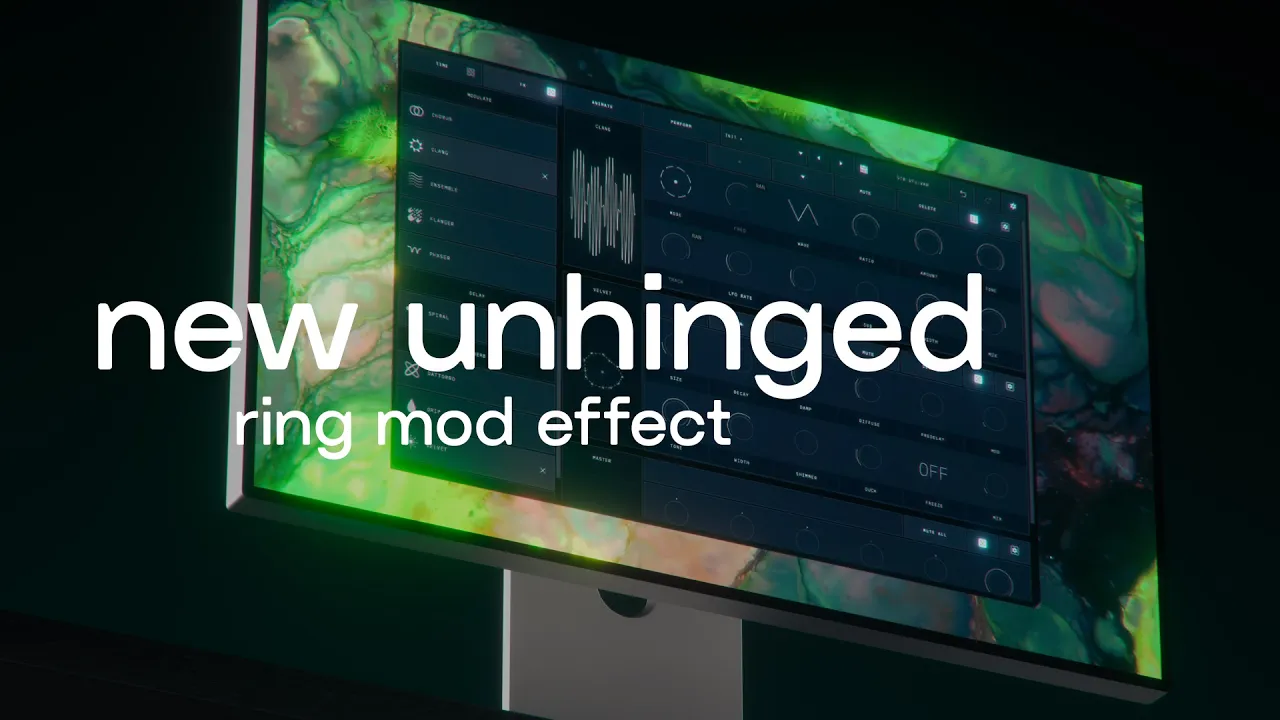
CLANG (creative Ring Mod)

ENSEMBLE (BBD-style with 4 historical modes)

FLANGER (with through-zero)

PHASER (up to 12 continuous stages)

ORBIT (panner)

TREMOR (tremelo)

DELAY
SPIRAL (stereo tape delay with independent L/R rates, ping-pong, wobble, ducking, taps, reverse)

REVERB
DATTORRO (plate reverb)

DRIP (spring reverb)

AETHER (shimmer reverb)

DYNAMICS
SQUASH (OTT-style multiband compressor)

GATE (Noise gate)
New!

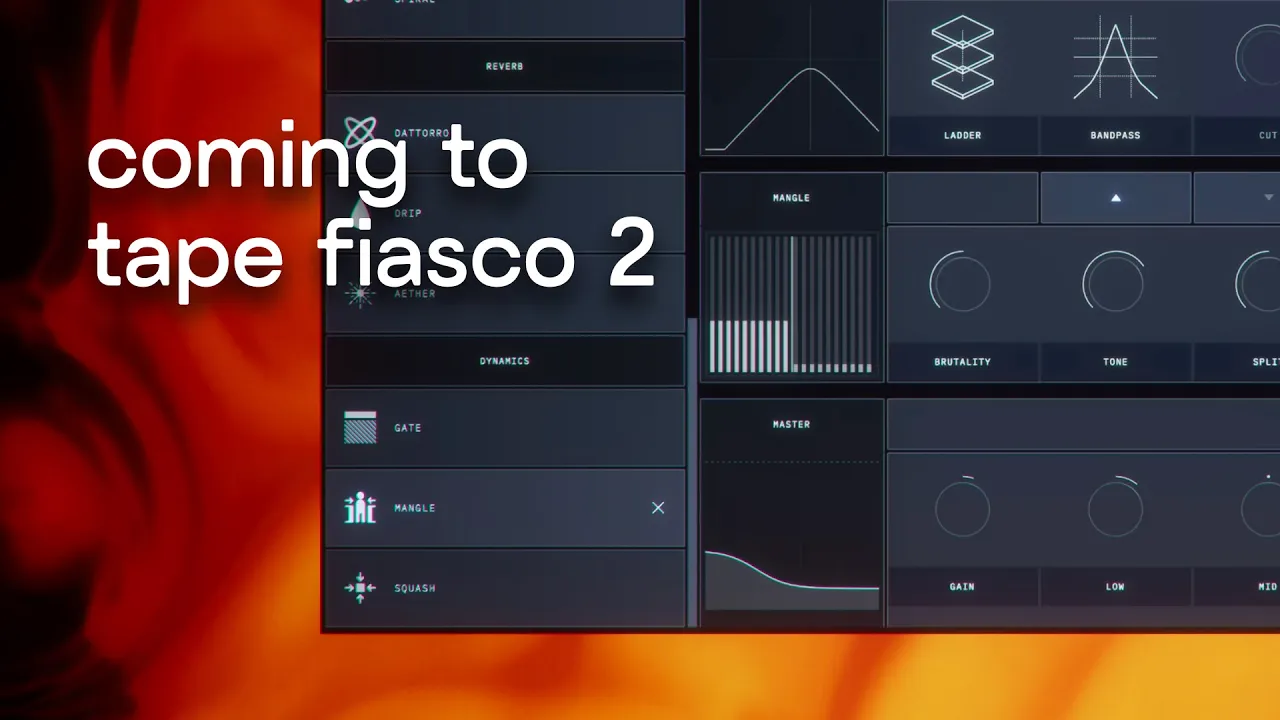
MANGLE (Multiband Compressor)
New!

master chain

Gain, Mix & Pan.
3-band EQ.
Compressor.
Soft limiter.
Auto gain.
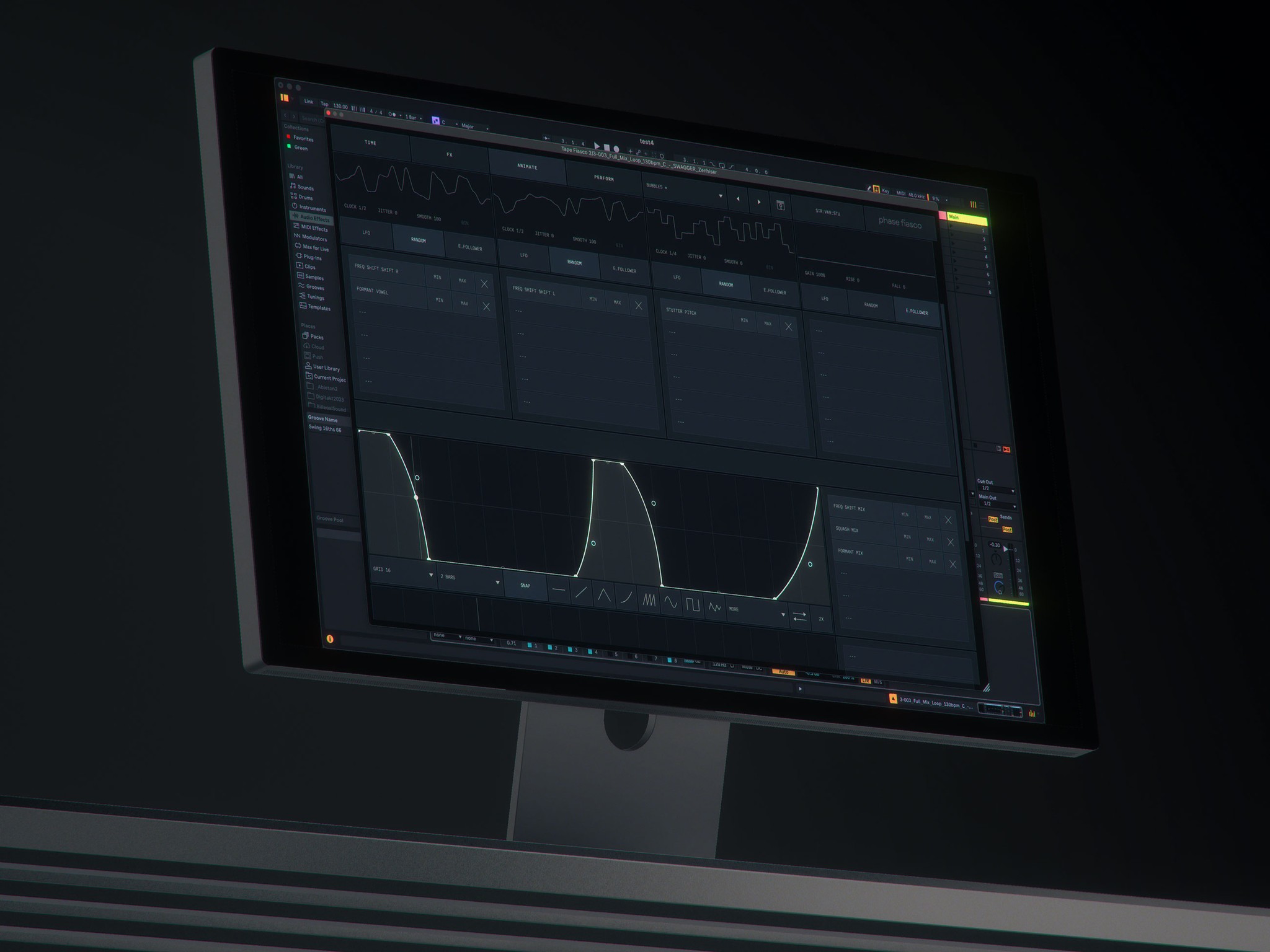
Animate
The deep modulation surface:
4 modulator columns, each switchable between LFO / RANDOM / E.FOLLOWER.
LFO: 19 shapes (sine, triangle, saws, squares at multiple duties, EXP / LOG / PEAK / VALLEY / BUMP / DBL / SKEW / STAIRS), 11 host-synced rates (1/64 bar to 16 bars), jitter, smoothing.
RANDOM: same rate grid, BIN toggle for stepped vs interpolated output, position-keyed reproducible jitter.
E.FOLLOWER: gain, rise, fall, plus a bipolar TONE that turns the follower into a lowpass version (tracks kicks/bass) or a highpass version (tracks hats/transients).
3 bezier graph editors, each looped over 1/4 bar to 16 bars. Click to add points, drag points and bend handles to shape.
6 target slots per modulator (4 columns + 3 graphs = up to 42 simultaneous destinations). Each slot has MIN / MAX clamps; graph slots additionally have START / END / SKEW for triangular envelope shaping over the curve.
STUTTER SEQ and STRETCH SEQ rows at the top, each a 64-step on/off sequencer with chain 1–4.
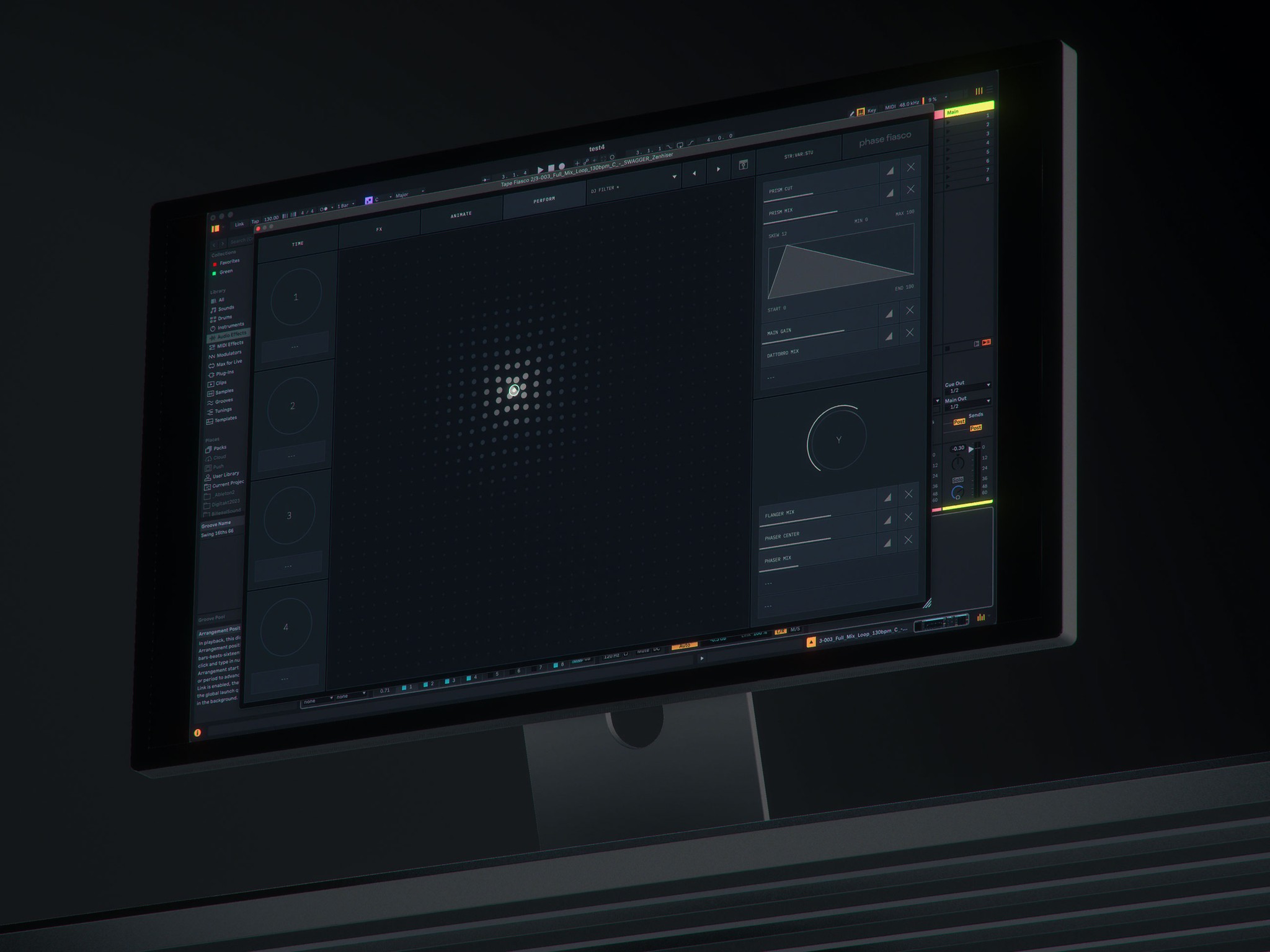
Perform
A simpler routing surface aimed at host automation and live performance:
4 host-automatable MACRO knobs, each routable to up to 5 destinations with per-slot triangular response curves (START / END / SKEW / MIN / MAX).
A host-automatable X/Y pad driving
PERFORM_X+PERFORM_Y, each axis routable to up to 5 destinations with the same per-slot curve.
Total mappable destinations across the modulation system: 42 (Animate) + 30 (Perform) = 72 simultaneous modulation destinations.
Who it's for
Producers working with loops and samples who want rhythmic re-edits, glitchy reinterpretations, stutter sequences, time-stretches, and tape-stop fills that lock to the host.
Sound designers who need a place to do granular freezes, modulated resonant ringing, comb-filtered drones, BBD ensembles, plate verbs, and circuit-bent chaos in one tool without bouncing through 8 plugins.
Live performers who want a small surface (4 macros + X/Y pad) that maps to many destinations and shows up cleanly in the DAW's automation lane.
Ambient and experimental musicians who want one plugin that can carry a track from a tape-warble pad to a stuttered hyperpop fill to a sieve-filtered drone to a plate-verb tail without switching tools.
+ tax where applicable